
Cork flooring, listed buildings & conservation
Cork flooring for listed buildings and conservation projects.
Listed-building floors come with a constraint set no other brief carries: substrate must not be damaged, acoustic impact must clear planning conditions, thermal performance has to work with cast-iron radiators or modest UFH, and the visual choice has to read as appropriate to the building. Cork, sustainably sourced, acoustically resilient, thermally warm, fitted with reversible methods, is one of the few floors that holds against all four.
Why listed-building consultants specify cork.
The acoustic case is usually the strongest entry point. Listed buildings often have suspended timber upper floors with no acoustic deadening beyond the original joist construction. Carpet was the historic answer; cork is the modern one. Cork delivers measurable Rw/dB acoustic improvement underfoot without locking the building owner into a soft-surface aesthetic. For listed flats, conversion projects, and listed-building hotels, this is often the line item that turns the planning conversation.
Thermal comfort is the second case. Listed buildings often have radiators rather than UFH, and the floor temperature in heating-off periods is low. Cork’s low thermal conductivity means the floor reads warmer underfoot at any given air temperature than wood, stone or tile. For occupied listed residences, this is the difference between a habitable and a tolerable winter.
Fixing without substrate damage.
Cork flooring can be installed as a floating floor over an acoustic underlay, avoiding adhesive bond to the original substrate. The 2G locking joint in Classic Cork construction makes this credible at specifier grade, the floor is dimensionally stable, the joints hold tight without screws or glue into historic boards, and the system is reversible if a future scheme requires it. For listed projects, this matters: the conservation officer can be told, accurately, that the original substrate is untouched.
Waterproof construction, listed bathrooms and kitchens.
Many listed-building schemes add or refurbish bathrooms and kitchens during conversion. Until Classic Cork construction, cork was ruled out of these rooms. With the 100% waterproof construction, cork is now credible in listed bathrooms (warmer than tile, quieter than wood, biophilic in texture) and listed kitchens (durable, dimensionally stable, easy to maintain).
Sustainability and the listed brief.
BREEAM Domestic Refurbishment and BREEAM In-Use both apply to listed conversions in commercial use. Cork’s -101 kg CO2e/m2 net carbon position, FSC/PEFC chain of custody, and EPD-verified embodied carbon documentation all hold up against the scheme criteria. The Floor Gallery routes Mat 03 documentation through every quote.
Listed-building FAQ.
Can cork be installed without damaging original floorboards?
Yes. Cork from Classic Cork construction installs as a floating floor with a 2G click-lock joint, over an acoustic underlay. The system is reversible, no adhesive bond to the original substrate, no screws into historic timber.
Does cork meet listed-building acoustic requirements?
Cork provides measurable Rw/dB acoustic improvement underfoot. For listed flats and conversion projects with planning acoustic conditions, cork is regularly specified to clear the requirement without resorting to full carpet specification.
Is cork suitable for unheated listed properties?
Yes, in fact cork is preferable in unheated and modestly-heated buildings. Its low thermal conductivity means the floor reads warmer underfoot than wood, stone or tile at the same air temperature.
Can cork go in a listed bathroom?
Yes, with Classic Cork construction’s waterproof construction. The Floor Gallery supplies waterproof cork into listed-bathroom and listed-kitchen briefs as standard.
Will conservation officers approve cork specification?
Conservation officers respond well to materials that are reversible, sustainably sourced, and historically credible. Cork has been used in UK interiors since the early 20th century. The reversible fixing method, EPD-verified carbon documentation and FSC chain of custody are usually the persuasive elements.
Featured projects
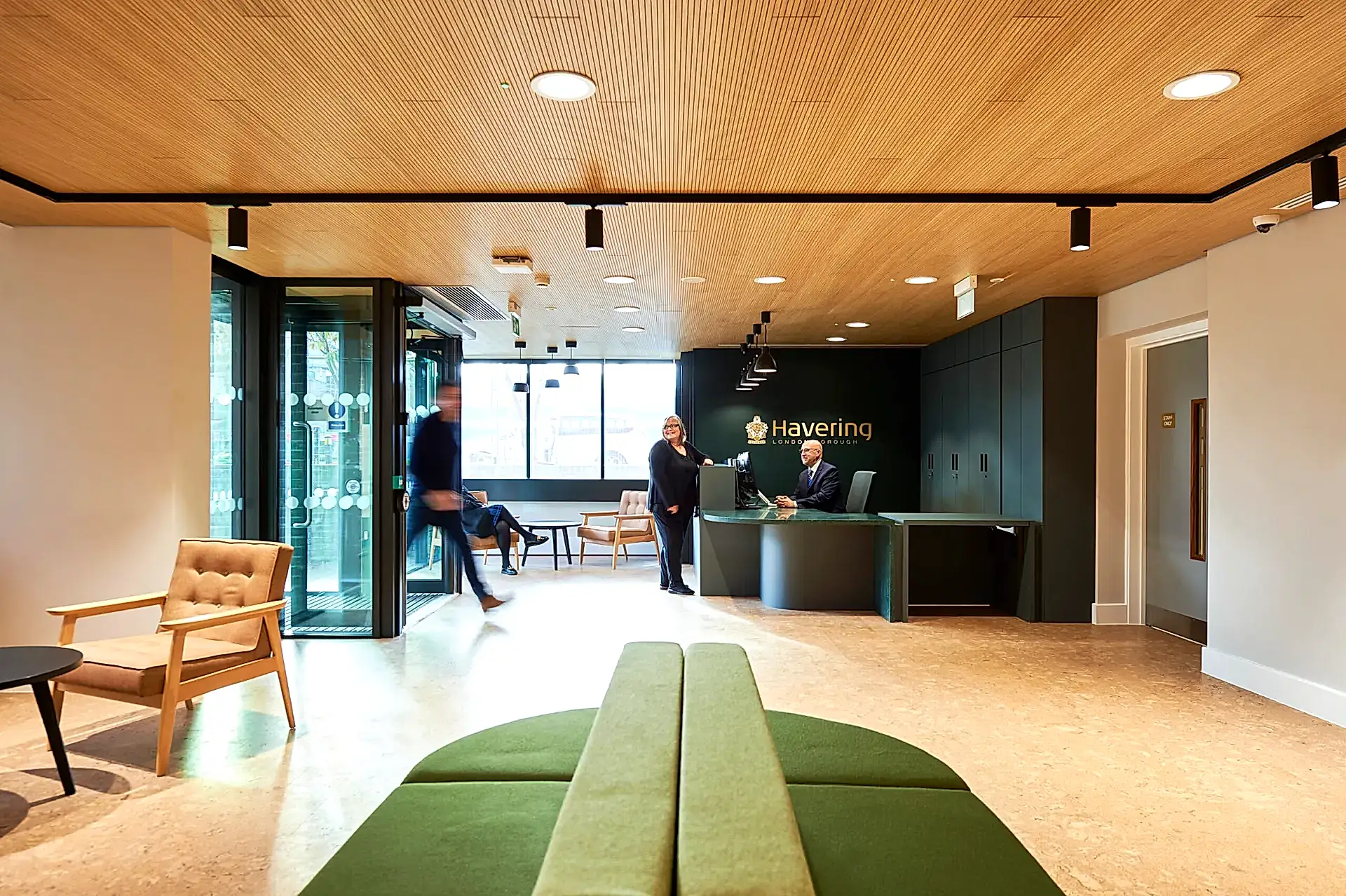
Listed-building and civic conservation projects where cork has been specified for its reversible install and acoustic credentials.