


Explore cork flooringRequest samples
Why retail flagships are specifying cork over LVT
Retail floor specifications are shifting. The decade-long default of commercial-grade LVT is being replaced, in flagship and brand-led stores especially, by cork flooring. The reasons map directly to where retail design briefs have moved: biophilic interiors, indoor-air-quality credentials, acoustic comfort on the shop floor, and a sustainability story the brand can hang its window dressing on.
This guide walks through why cork wins on retail specs that take a 10–15 year lifecycle view, a flagship cork case study (Asics Tokyo), a complementary PVC-free retail case from our Organic Collection (Russell & Bromley UK rollout), and the cost-of-ownership maths against LVT.

Four reasons retail specifies cork
Acoustic comfort
Cork’s closed-cell honeycomb structure absorbs footfall sound. On a busy shop floor that means lower reverberation, quieter conversation between staff and customers, and a softer in-store atmosphere, the opposite of the hard-edged echo of LVT-on-concrete.
Biophilic by default
Retail design is increasingly biophilic, natural materials, plant-derived surfaces, the sensory cues that signal “real”. Cork is harvested from cork oak bark every 9–12 years without felling the tree. No engineered material reads as warmly natural underfoot.
Indoor air quality
GREENGUARD Gold, A+ French Mark, BREEAM Exemplary. PVC-free, no DOTP plasticiser, no halogenated flame retardants. Critical for retail brands with sustainability or wellness positioning, and increasingly required by parent-company ESG specifications.
Sustainability narrative
EPD-verified A1–A3 GWP of 0.72 kg CO₂eq/m², a fraction of LVT’s 6–9 kg. Carbon-negative on a cradle-to-gate-with-sequestration basis. The story your CSR team can tell about the actual store fit-out.
Case study: Asics Tokyo flagship store
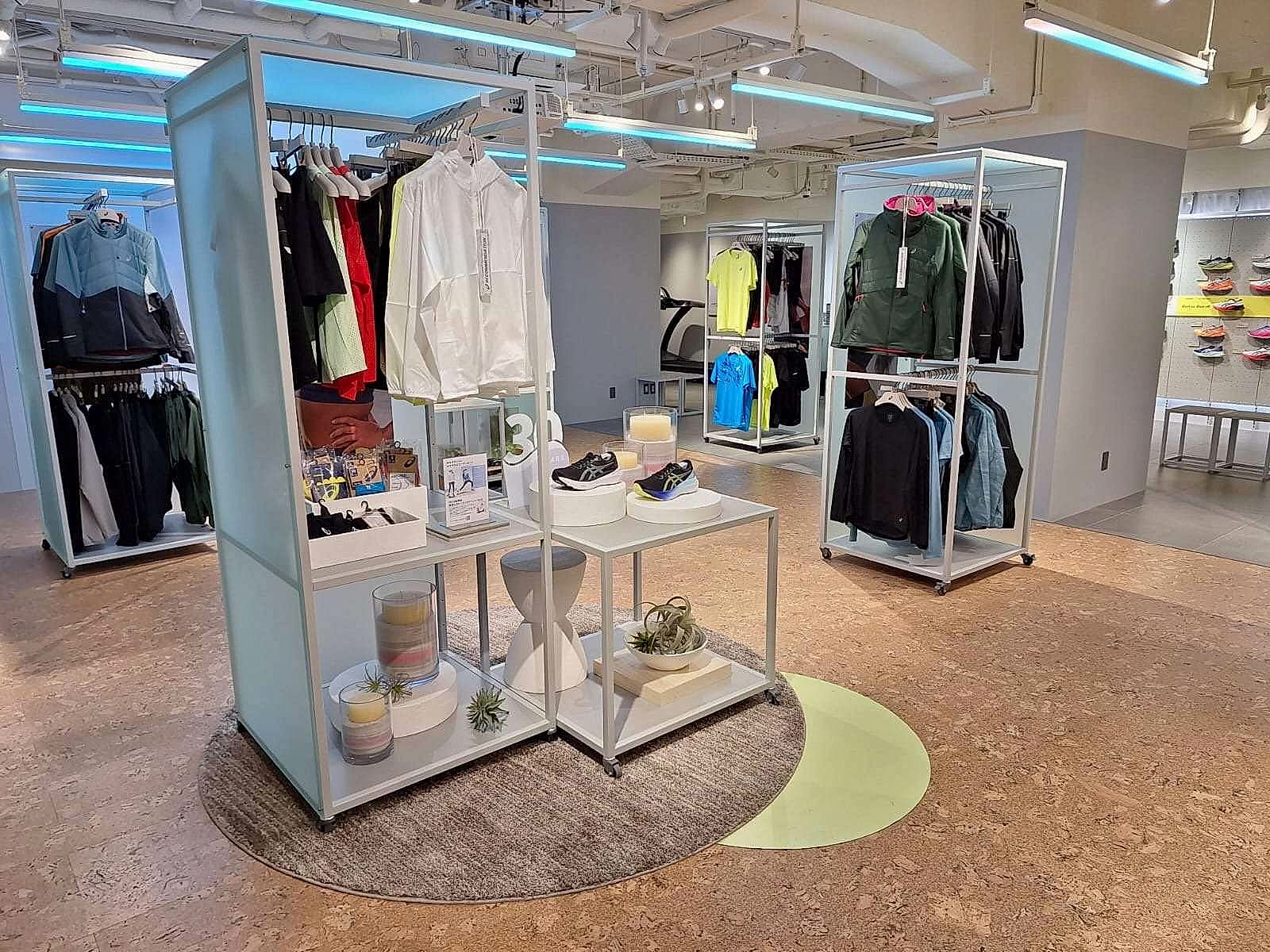
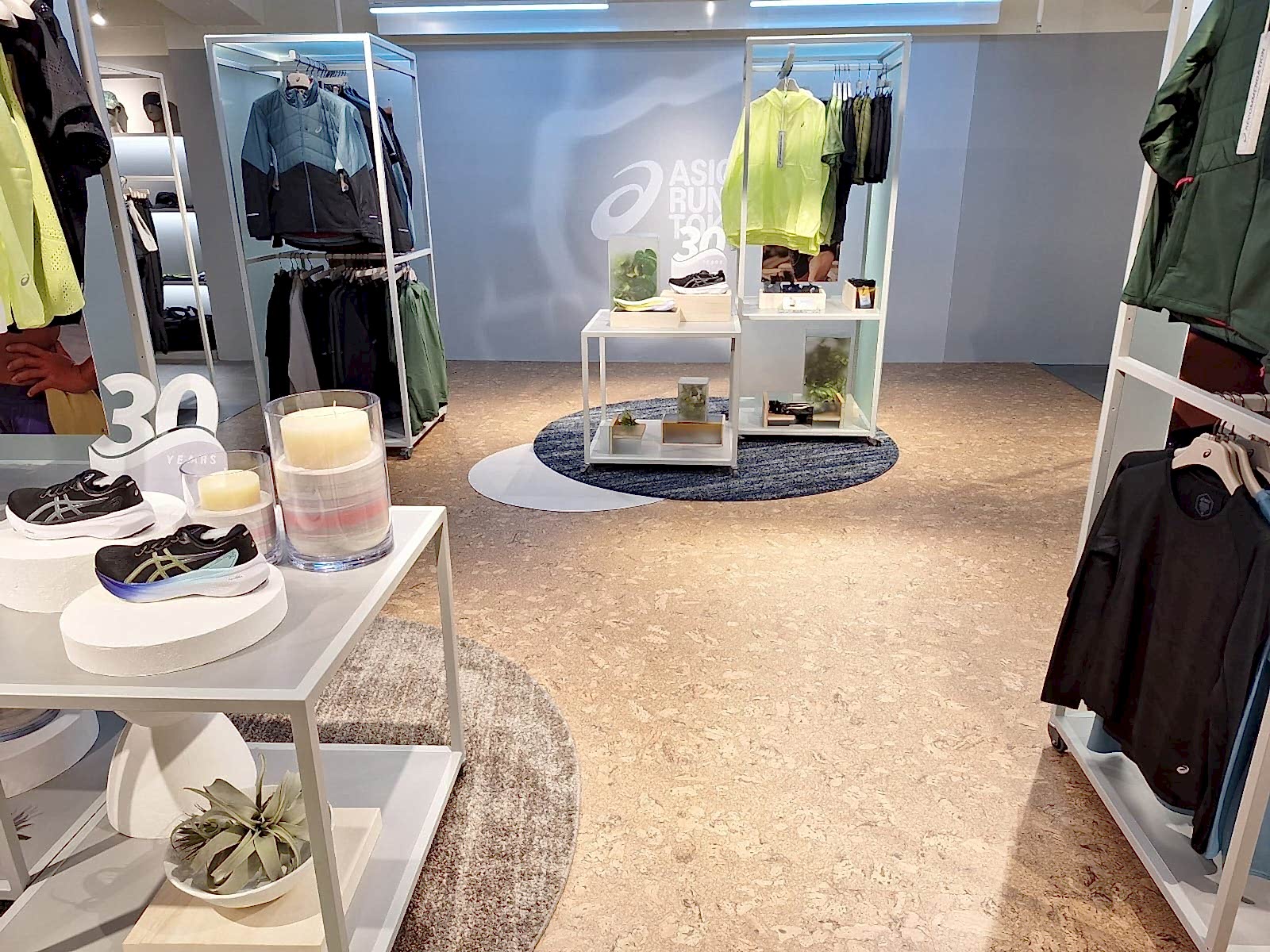
The Asics flagship in Tokyo specified the Classic Cork Collection in Original Shell across the retail interior. The choice connects directly to Asics’ brand positioning around movement, performance and natural materials, but also to the practical retail specification needs the brief surfaced: an acoustic shop floor that absorbs the sound of a busy flagship rather than amplifies it, a sustainable surface that fits the brand’s environmental positioning, and a low-VOC, healthy-indoor-air specification appropriate for a long-trading retail interior. The cork runs across the main shop floor, with the warm tonal palette of Original Shell working alongside the brand’s product display.


Related case: Russell & Bromley UK rollout (Organic Collection, not cork)
To be clear up front, the Russell & Bromley flagship rollout used our Organic Collection, not cork. We’ve included it here because the brief and the rationale are directly relevant to retail specifiers considering cork: the same sustainability + indoor-air-quality + LVT-replacement decision tree, just answered with a different material in our PVC-free range.
Russell & Bromley, designed by Shed Design, moved their flagship store rollout from LVT to our Organic Collection in Bright Three (a wood-fibre PVC-free range, not cork). The decision was deliberate: a higher initial cost in exchange for the sustainability and indoor-air-quality story that PVC alternatives cannot defend. Many retail briefs choose between cork and Organic Collection on the same logic, the difference is biophilic + acoustic (cork) vs wood-aesthetic + comparable-cost (Organic). Both sit within The Floor Gallery’s sustainable-flooring portfolio.
Cork vs LVT for retail, the lifecycle maths
Retail flooring is one of the highest-traffic surfaces in any building. The default LVT specification gets specified on a 5–7 year refit cycle, one of the lowest lifecycle horizons in commercial flooring. Cork shifts that horizon to 25+ years with maintenance only.
| Measure | Classic Cork Collection (retail) | Commercial LVT (retail) |
|---|---|---|
| All-in installed cost / m² | £75–£100 | £45–£65 |
| Realistic service life in retail | 25+ years (re-seal at year 7–10) | 5–7 years (replacement on refit cycle) |
| Embodied carbon (A1–A3 GWP) | 0.72 kg CO₂eq/m² | 6–9 kg CO₂eq/m² |
| Acoustic on busy shop floor | Absorbs footfall sound | Reflects sound, raises ambient dB |
| Indoor air quality | GREENGUARD Gold, A+, PVC-free | 25–30% by mass DOTP plasticiser |
| Brand sustainability story | EPD-verified, montado biodiversity narrative | Petrochemical (PVC), no positive narrative |
For brand-led retail with a 10–15 year ownership horizon, cork comes out cheaper across the lifecycle and delivers the sustainability story flagship retail specifications increasingly require. Read the full cork vs vinyl comparison →
When cork is the right retail floor
- Brand-led flagship stores where the floor is part of the brand experience (Asics, Russell & Bromley pattern)
- Retail with sustainability or wellness positioning, cork’s EPD + GREENGUARD + BREEAM story aligns with the brand promise
- Long-cycle stores with 10–15 year ownership horizons, cork’s lifecycle wins on cost
- Stores in residential conversion buildings where Building Regs Part E may apply (cork over Silent Lay underlay reaches 16–18 dB ΔLw)
- Department-store environments where acoustic comfort across long opening hours matters
When cork isn’t the right retail floor
- Discount / fast-fashion retail with 3–5 year refit cycles and no lifecycle premium budget, LVT wins on first cost alone
- Food and beverage retail wet zones (cafés, restaurants behind glass), cork is not appropriate as a primary wet-zone floor
- Heavy point-loading retail (warehouse-style displays, automotive showrooms with vehicles), engineered oak or alternative surfaces handle better
Frequently asked questions about cork flooring in retail
Does cork flooring work in high-traffic retail interiors?
Yes, specified correctly. The Classic Cork Collection’s commercial-grade UV-cured factory finish is designed for high-traffic commercial use. Asics specified it in their Tokyo flagship across the main shop floor; Russell & Bromley specified our Organic Collection (the wood-fibre alternative within the same sustainable-flooring family) for their flagship rollout. The factory seal is renewable on site every 7–10 years rather than being replaced, taking the floor through a typical retail brand’s full lifecycle without a full refit.
Is cork flooring cheaper than LVT for retail?
On initial installed cost, no, cork at £75–£100/m² installed sits above commercial LVT at £45–£65/m². On lifecycle cost over 10–15 years, yes, LVT typically requires replacement on a 5–7 year retail refit cycle, doubling its lifecycle cost; cork lasts the full cycle with re-seal-only maintenance. The cost story flips depending on whether the brand looks at first cost or lifecycle cost.
Can cork flooring meet retail Building Regulations requirements?
Yes. For retail in mixed-use developments where Part E impact-sound transmission applies between commercial and residential floors, cork over our Silent Lay acoustic underlay reaches 16–18 dB ΔLw, sufficient for compliance. For fire reaction requirements, the Classic Cork Collection meets standard commercial classifications. Specifier-grade documentation supplied with every project.
Why are flagship brands choosing cork specifically?
Three reasons converging in 2026: (1) parent-company ESG specifications increasingly require PVC-free, low-embodied-carbon materials, ruling out LVT; (2) biophilic retail design has moved from trend to default specification, and cork reads more authentically natural than any engineered alternative; (3) acoustic specifications on busy retail floors are being upgraded as customer experience research consistently links lower in-store dB levels to longer dwell time and higher conversion. Cork answers all three.
What’s the difference between cork retail flooring and our Organic Collection?
Both are PVC-free, sustainable alternatives to commercial LVT. Cork is the natural-bark material (Classic Cork Collection, Cork Styles), biophilic, soft underfoot, acoustic. Organic Collection is a natural wood-fibre alternative, also PVC-free, also low-VOC, but with a different aesthetic and price point. Russell & Bromley chose Organic Collection in Bright Three over LVT on exactly these criteria; many flagship retail briefs choose cork on the same logic but with the biophilic + acoustic angle leading. Both feature in our sustainable-flooring portfolio.
Where can I see cork retail samples?
Sample displays of all our ranges sit at the Taylor Maxwell flagship London showroom (BondBryan). Project-specific sample boards dispatched anywhere in the UK within 48 hours. Send us your project brief and we’ll come back within one working day.
Specifying cork flooring for your retail project
For project-specific samples, technical data sheets, EPDs, BIM files or a retail-project quote, get in touch.